3D Filament Cheat-Sheet
A general overview and reference for various filament properties and types

Overview
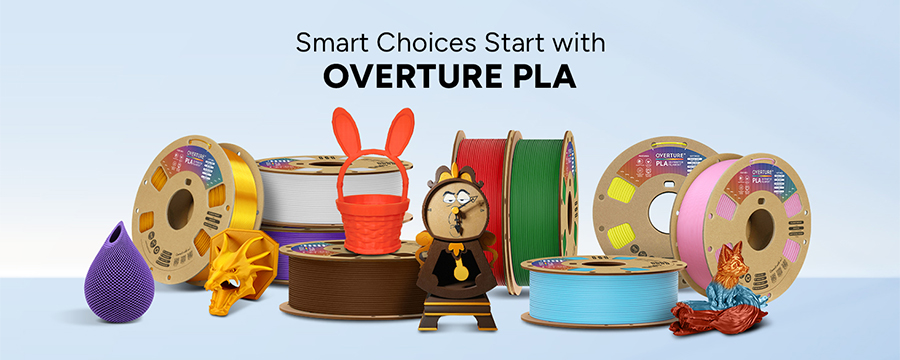
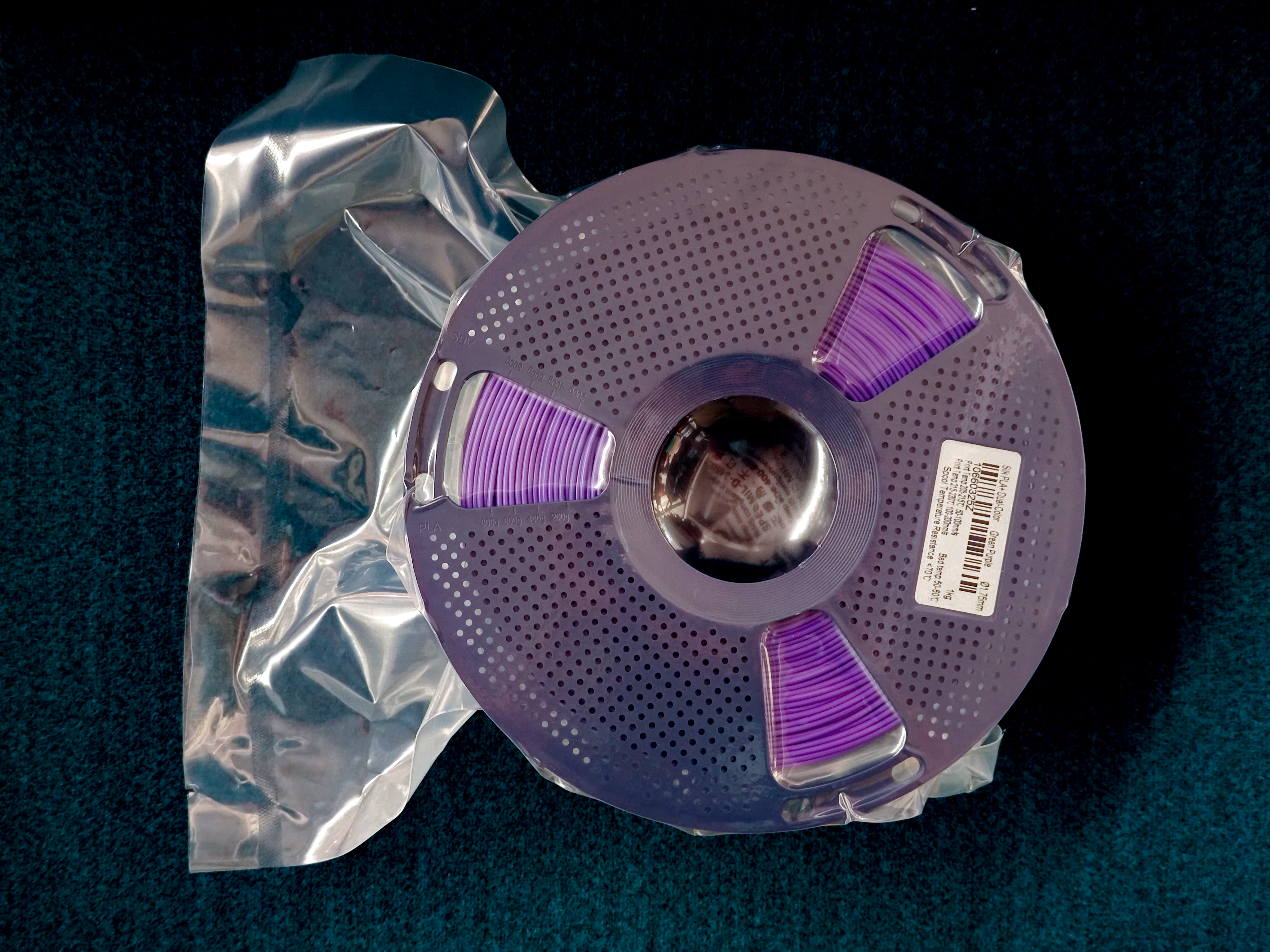
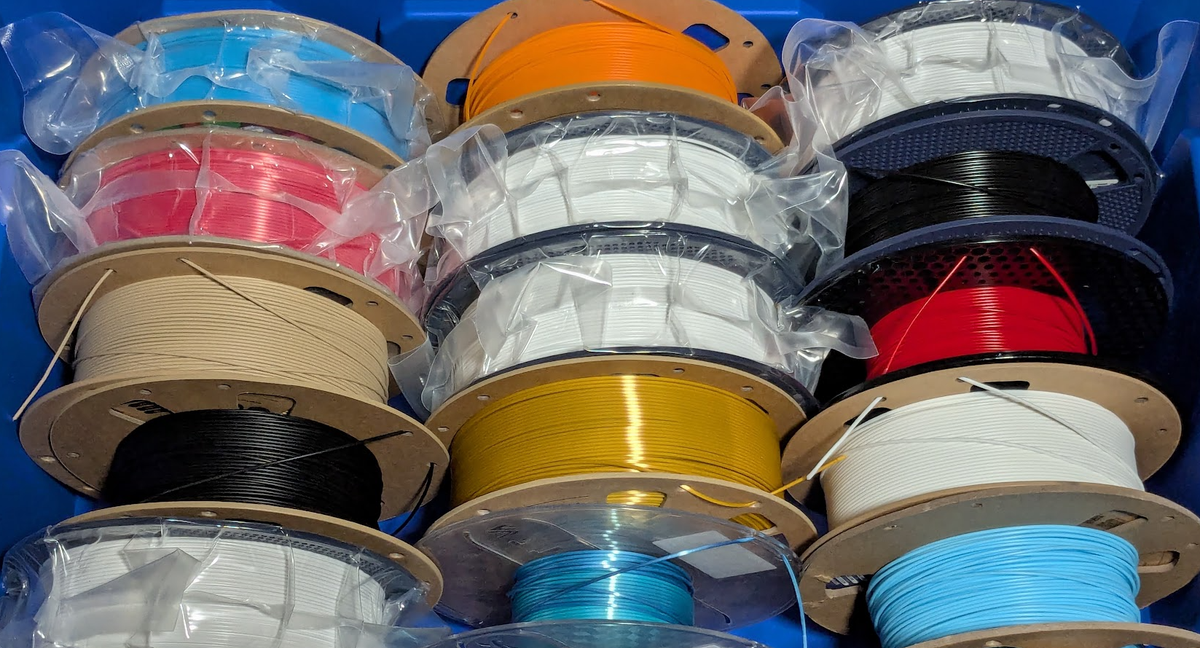
When you start getting into 3D printing, the most common filament is PLA - it's easy to print and suitable for most basic uses.
PLA is far from the only option available though, and it can be somewhat confusing to figure out what filament is appropriate for different applications. For example, an indoor desk decoration isn't going to have the same material requirements as a sensor housing that sits outside in the elements 24/7.
Suppliers also use different terms to describe filament, such as "strength", "toughness", etc. In this post, I try to list what each of these terms mean and provide an overview of which materials to choose for a given project.
TLDR
- PLA: An easy-to-print material but has low heat and impact resistance. Good for models, prototypes, and decorative parts.
- PETG: While slightly more difficult to print than PLA, it's still fairly easy and has a good balance of strength and toughness. It's a good choice for general-purpose functional parts.
- TPU: Moderate printability and absorbs moisture, but soft and highly flexible. Good for flexible parts such as phone cases, gaskets, seals, and protective pads
- ASA: Difficult to print, but high strength and UV / Weather shielding. Good for parts that will be outdoors, in the elements, or requires heat resistance
- ABS: Difficult to print but high strength. Good for robotics and functional parts.
- PC: Difficult to print, but high strength and heat tolerance. Good for functional or automotive parts and tooling
- Nylon: Difficult to print, but high strength and abrasion resistance. Good for functional, automotive, or industrial parts.
Filament Properties
When I mention "filament properties", I'm referring to how manufacturers define the characteristics of their filaments. Each manufacture uses different measurements and it can be somewhat difficult to understand what they mean.
Impact Resistance / Toughness
Impact resistance is the the amount of energy required to break the material. Basically, how well can it take a sudden impact without breaking. Depending on the manufacturer, this could also be called toughness.
How hard can this be hit without breaking?
Tensile Strength
Tensile strength is the amount of load that a material can support without breaking while being stretched.
How much force does it take to pull this apart?
Stiffness
Stiffness refers to the resistance of stretching or bending under tension
How much force do I need to apply before this bends?
Elongation
Elongation is the resistance to breaking while being stretched
How much can this stretch before it breaks?
Heat Deflection
Heat deflection is how well a material can withstand elevated temperatures without losing shape or functionality. This is important in parts exposed to high temperatures, like automotive or electronic housings.
How hot can this get before it deforms?
Printability
Printability is a general term indicating how easy a material is to print, considering things such as required temperature, bed adhesion, and tendency to warping
How easy is this to print?
Filament Details
Now that we have an idea of what some of the properties used to describe filament mean, lets take a look at the properties of different filaments, and what they're best for
PLA
PLA is an easy-to-print material but has low heat and impact resistance.
Properties
- Impact Resistance: Low
- Tensile Strength: Medium
- Stiffness: High
- Elongation: Low
- Heat Deflection: Low
- Printability: High
Applications
- Miniatures
- Sculptures
- Cosplay
- Home decor
- Architectural models
- Prototypes
PETG
PETG is slightly more difficult to print than PLA, but has a good balance of strength and toughness.
Properties
- Impact Resistance: Medium
- Tensile Strength: Medium
- Stiffness: Medium
- Elongation: Medium
- Heat Deflection: Medium
- Printability: High
Applications
- Cosplay
- Outdoor use
- Functional Parts
- Brackets
- Enclosures
TPU
TPU is slightly more difficult to print and absorbs moisture, but is highly flexible and impact resistant.
Properties
- Impact Resistance: High
- Tensile Strength: Low
- Stiffness: Low
- Elongation: High
- Heat Deflection: Medium
- Printability: Medium
Applications
- Bands & straps
- Gaskets & seals
- Protective bumpers
- Compression parts
ASA
ASA is difficult to print, but has high strength and UV / Weather shielding.
Properties
- Impact Resistance: Medium
- Tensile Strength: Medium
- Stiffness: High
- Elongation: Low
- Heat Deflection: High
- Printability: Low
Applications
- Outdoor use
- Weatherproof / Heat-resistant prototypes
- Automotive parts
- Electronic housings
- Mechanical enclosures
ABS
Similar to ASA, ABS is difficult to print; however, it has high strength ratings.
Properties
- Impact Resistance: Medium
- Tensile Strength: Medium
- Stiffness: High
- Elongation: Low
- Heat Deflection: High
- Printability: Low
Applications
- Mechanical parts & tools
- Robotics
- Automotive parts
PC
PC is difficult to print, but has high strength and heat tolerance.
Properties
- Impact Resistance: High
- Tensile Strength: High
- Stiffness: Medium
- Elongation: Medium
- Heat Deflection: High
- Printability: Low
Applications
- Functional brackets, housings, and fixtures
- Heat-exposed parts
- Jigs
- Tooling
- Enclosures
- Cases
Nylon
Nylon is difficult to print, but is abrasion resistant and strong.
Properties
- Impact Resistance: Medium
- Tensile Strength: High
- Stiffness: Low
- Elongation: High
- Heat Deflection: High
- Printability: Low
Applications
- Functional prototypes
- Gears & levers
- Automotive parts
References